.png)

Laser Hair Removal
Laser hair removal is a safe and effective treatment designed to eliminate unwanted hair by targeting the hair follicle at its source. Using advanced light-based technology, the laser delivers energy that is absorbed by the pigment in the hair, creating heat that damages the follicle and prevents future growth. Diolaze XL by InMode enhances this process with built-in cooling for added comfort and the ability to treat larger areas quickly and efficiently. Because hair grows in cycles, a series of treatments is needed to fully target active follicles. Once a follicle is successfully treated, it no longer produces hair resulting in smooth, long-lasting results.Individual results can vary, as factors such as hormone levels or conditions like hirsutism may influence hair growth and may require ongoing maintenance treatments.
_edited.jpg)
_edited.jpg)
Who is a Good Candidate?
-
Laser Hair Removal is a great option for both men and women who want to significantly reduce unwanted hair growth and achieve smoother, lower-maintenance skin.
-
This treatment works best on darker, more pigmented hair, as the laser targets the pigment in the follicle to reduce future growth.
-
Patients with hormonal conditions (such as PCOS or other imbalances) can still be good candidates, but may require additional sessions to achieve optimal results.
-
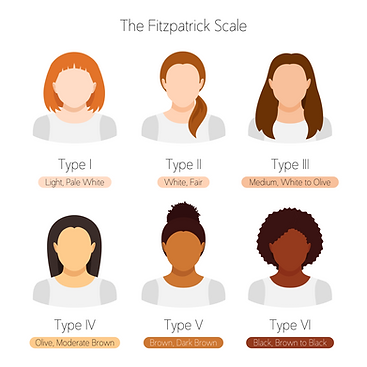
Your device is safe for all Fitzpatrick skin types, making it suitable for a wide range of skin tones and backgrounds.
-
Very light blonde, white, or gray hair typically does not respond well due to the lack of pigment needed for the laser to effectively target the follicle.

What Areas Can Be Treated?


What to Expect
Before
For optimal results, we recommend that patients avoid waxing in any areas scheduled for laser treatment. Keeping the hair within the follicle allows the laser to effectively target and destroy the hair at the root. We kindly ask that all patients shave the treatment area 24–48 hours prior to their appointment.
During
Laser hair removal is generally well tolerated when performed using appropriate settings. Most patients describe the sensation as a mild, quick “snap” accompanied by slight warmth. Certain areas such as the upper lip, underarms, and Brazilian region may be more sensitive. Our providers carefully select customized settings to ensure optimal results while maintaining your comfort, though some areas may feel mildly uncomfortable during treatment.
It is normal to experience mild redness or small, raised bumps around the treated hair follicles following your session. These effects are temporary and typically subside within a few hours. You may continue to notice some hair growth between treatments; however, with consistent sessions, regrowth often becomes patchy and progressively reduced. Once a follicle has been successfully treated, it will no longer produce hair, though future growth can be influenced by hormonal or medical changes.
After
FAQ's:
How does laser hair removal work? Laser hair removal uses concentrated light energy to target the pigment in the hair follicle. The heat damages the follicle, which helps reduce future hair growth over time.
Is laser hair removal permanent? Laser hair removal significantly reduces hair growth, but results vary. Most clients experience long-term hair reduction rather than complete permanent removal, and occasional maintenance sessions may be needed.
How many treatments will I need? Most clients need a series of 8-12 treatments spaced several weeks apart. The exact number depends on hair type, treatment area, and individual hair growth cycles.
Are there any side effects? Temporary redness, swelling, or mild sensitivity in the treated area is common and typically resolves within a few hours to a couple of days.
Who is not a good candidate for laser hair removal? Laser hair removal may not be suitable for individuals with certain skin conditions, active infections in the treatment area, or those who are pregnant. A consultation is recommended to determine eligibility.
What should I avoid after my treatment? After treatment, it’s best to avoid sun exposure, hot showers, saunas, and intense workouts for 24–48 hours. Keeping the skin cool and protected helps reduce irritation and supports proper healing.